Brand Lift, Explained Simply: What Livestream Campaigns Actually Do to Awareness and Intent
The most important sale your campaign drives won’t show up on your dashboard. It happens three weeks later, on the app, in a kirana, a mall or a showroom, bought by someone who saw your brand and never clicked anything.
That’s not an edge case, It’s how consumers behave. So when a marketer judges a campaign on clicks alone, they’re reading the smallest chapter of the story and calling it the book.
The evidence has been clear for over a decade. Les Binet and Peter Field’s research for the IPA found that the strongest brands split their budgets roughly 60:40 between building the brand and chasing the sale. They also warned that obsessing over the short term quietly erodes long-term profit. Clicks measure the 40. Brand lift measures the 60.
Most people see the first daily. Here’s how to read the second as plain-English guide.
What a brand lift study is
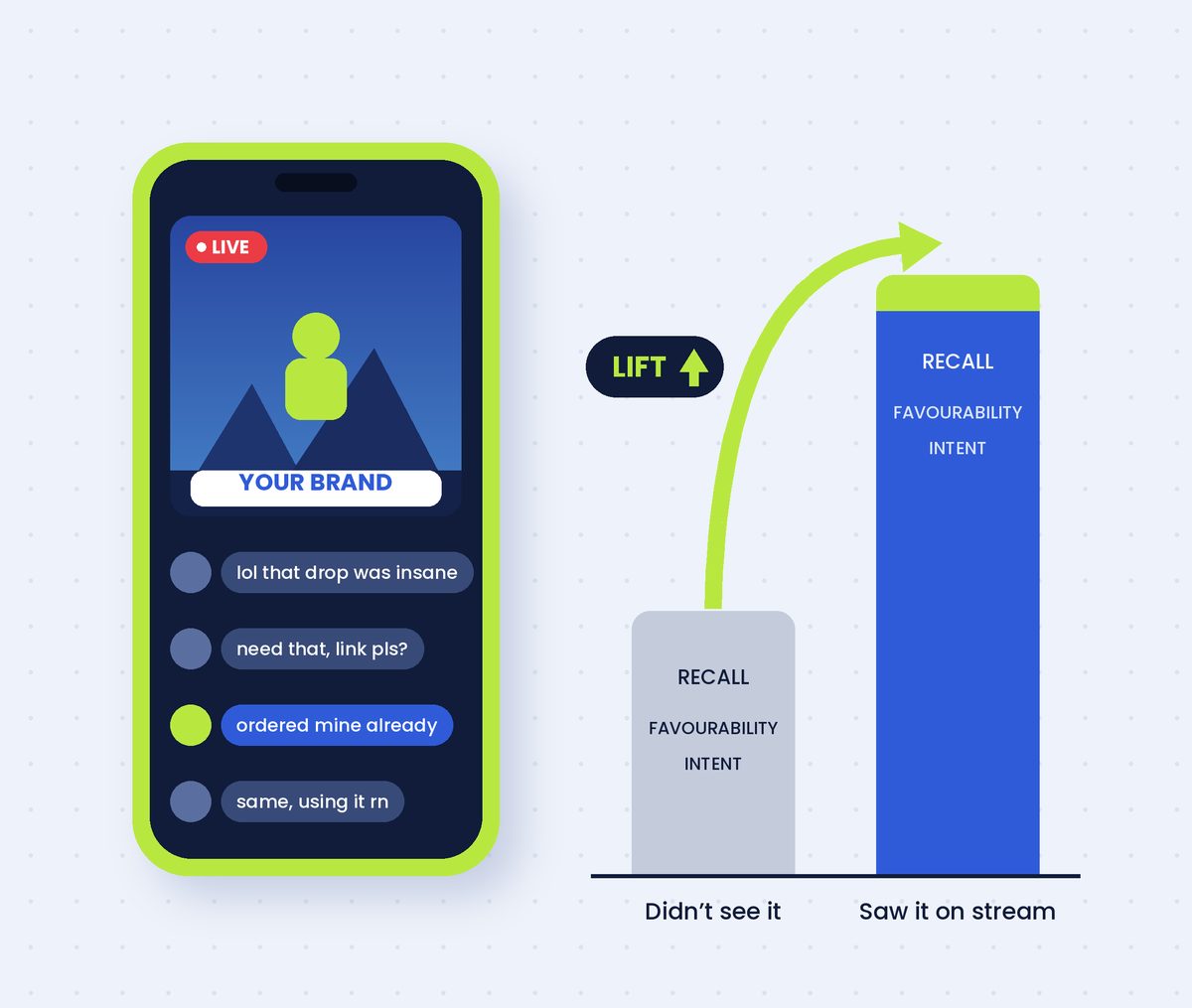
A brand lift study answers one question: did people who saw the campaign think differently about the brand than people who didn't?
It works like a medical trial:
Two groups. An exposed group saw the campaign. A control group was eligible to see it but didn't.
The same questions. Both groups get a short survey: "Which of these brands have you heard of?", "Which would you consider buying?"
Compare the answers. The difference between the two groups is the lift: the effect the campaign caused.
Google's version, for example, surveys people who saw the ads and people who were eligible but weren't shown them, and measures ad recall, brand association, brand awareness and consideration. A study typically runs for about 10 days.
The metrics, in order of difficulty
| Metric | The question behind it | How hard it is to move |
|---|---|---|
| Ad recall | Do you remember seeing an ad for this brand recently? | Easiest |
| Awareness | Have you heard of this brand? | Moderate |
| Consideration | Would you consider buying from this brand? | Harder |
| Favourability | How do you feel about this brand? | Harder |
| Purchase intent | How likely are you to buy it? | Hardest |
Recall moves first and fastest. Intent is the hardest to shift, which is why a lift there is worth the most.
How to read the numbers
Two numbers matter, and people mix them up constantly. Here's an illustrative example (not real campaign data):
In the control group, 20% say they'd consider the brand.
In the exposed group, 26% say so.
Absolute lift is the gap in percentage points: 26 minus 20 = 6 points.
Relative lift is that gap compared with the starting point: 6 divided by 20 = 30%.
Relative lift always sounds bigger. A good report shows both, so check which one you're being told.
Clicks measure the 40. Brand lift measures the 60.
What lift results usually show for livestreams
Independent attention research gives a useful benchmark. In dentsu and Lumen's 2024 gaming study, livestream ads delivered 57% correct brand recall against a dentsu norm of 38%, and lifted brand choice by 17% against a norm of 7.25%.
The reason is structural. A livestream keeps the brand on screen, inside content the viewer chose, carried by a creator they trust, for far longer than a skippable ad. Memory follows time and trust.
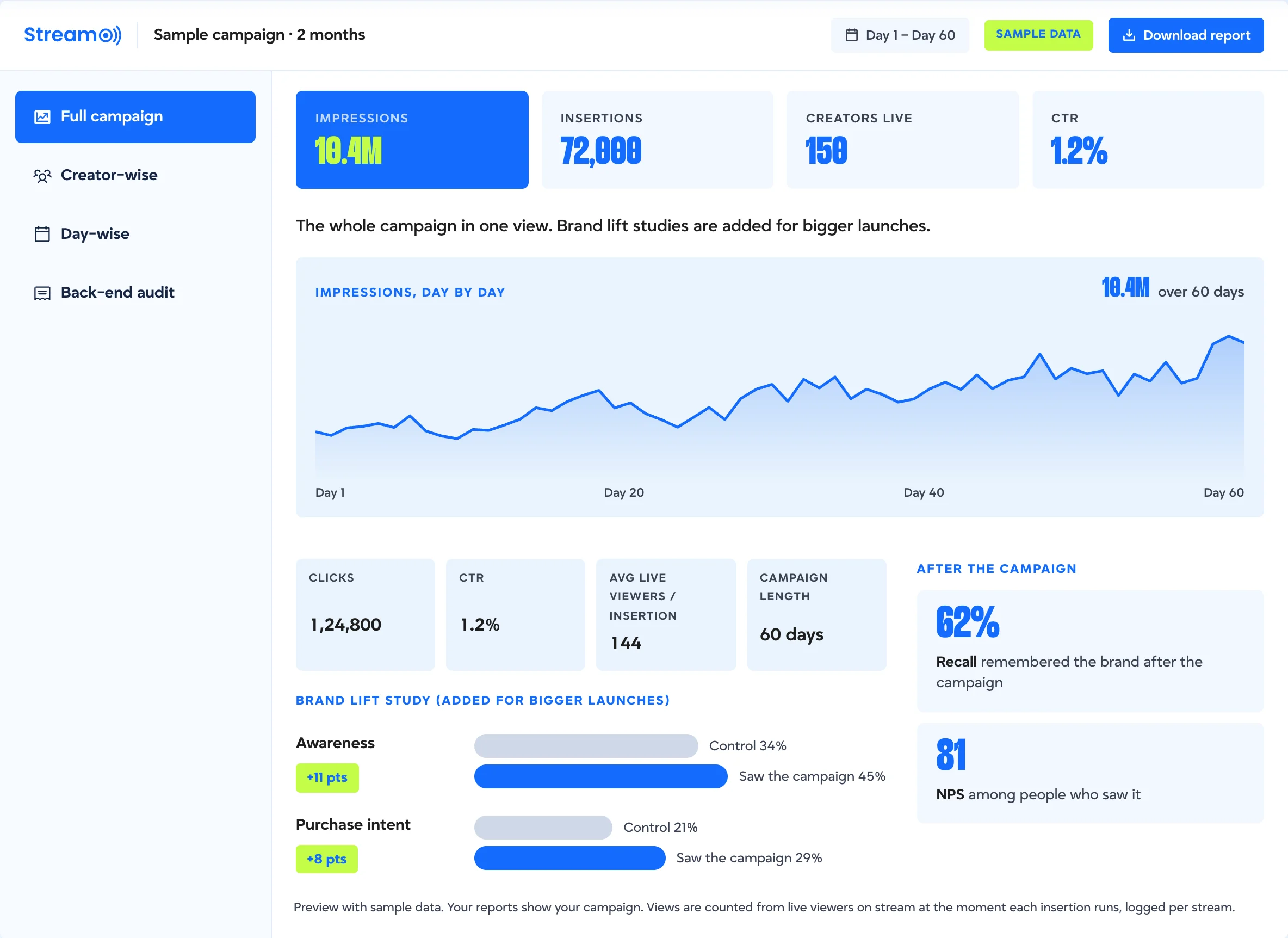
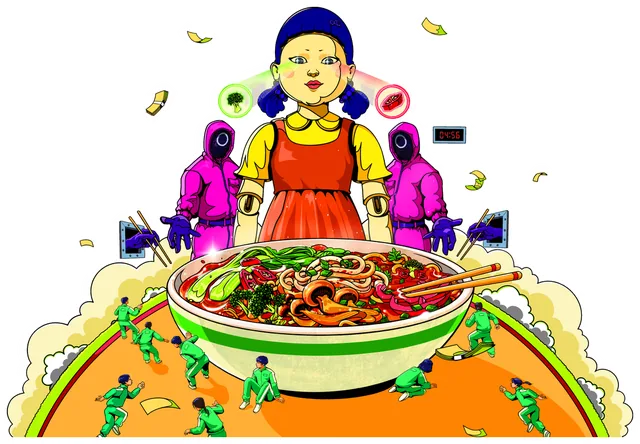
Our award-winning Knorr x Squid Game campaign recorded an 11% lift in awareness and a 28% lift in purchase intent.
Our award-winning Knorr x Squid Game campaign recorded an 11% lift in awareness and a 28% lift in purchase intent.
Five checks before you trust a lift study
Sample size. Small samples produce dramatic, unreliable numbers. Ask how many people answered in each group.
Statistical significance. Ask whether the lift is significant, not just positive.
The baseline. A 5-point lift means more for an unknown brand than for a household name.
Which metric moved. Recall is good. Consideration and intent are better.
Cost per lifted user. Divide spend by the number of people whose answer changed. It's the fairest way to compare formats.
Brand lift won't replace clicks for a performance campaign. But for building a brand with young India, it's the clearest proof that the attention you bought turned into something that lasts.