
The Livestream Marketing Masterclass: Six Modules to Get Your Team Fluent in Live Attention
Every major marketing shift looked optional until it wasn't. Search did. Social did. Short video did. Livestreaming is next, and most marketing teams are still learning its vocabulary.
That is why we built the StreamO Livestream Marketing Masterclass: six short modules that take a brand manager from "why should we care?" to "here's how we'll measure it". No jargon, no gaming knowledge required. Each module is a slide deck you can read in fifteen minutes and share with your team.
Module 1: The Rise of Livestream Marketing
For sixty years, attention had one address: the 30-second TV slot. That address is closing. Every generation discovers brands differently, from newspapers for boomers to creators for Gen Z and participation for Gen Alpha, and every brand simply follows attention.
Module 1 explains what livestream marketing is, why gaming got there first, and the three ways a brand can get into a stream: platform ads, a mega-creator partnership, or a creator network programme. It also kills three myths: that you need a huge budget, that it only works for gaming brands, and that you can't measure it.
Module 2: Understanding the Gaming Ecosystem
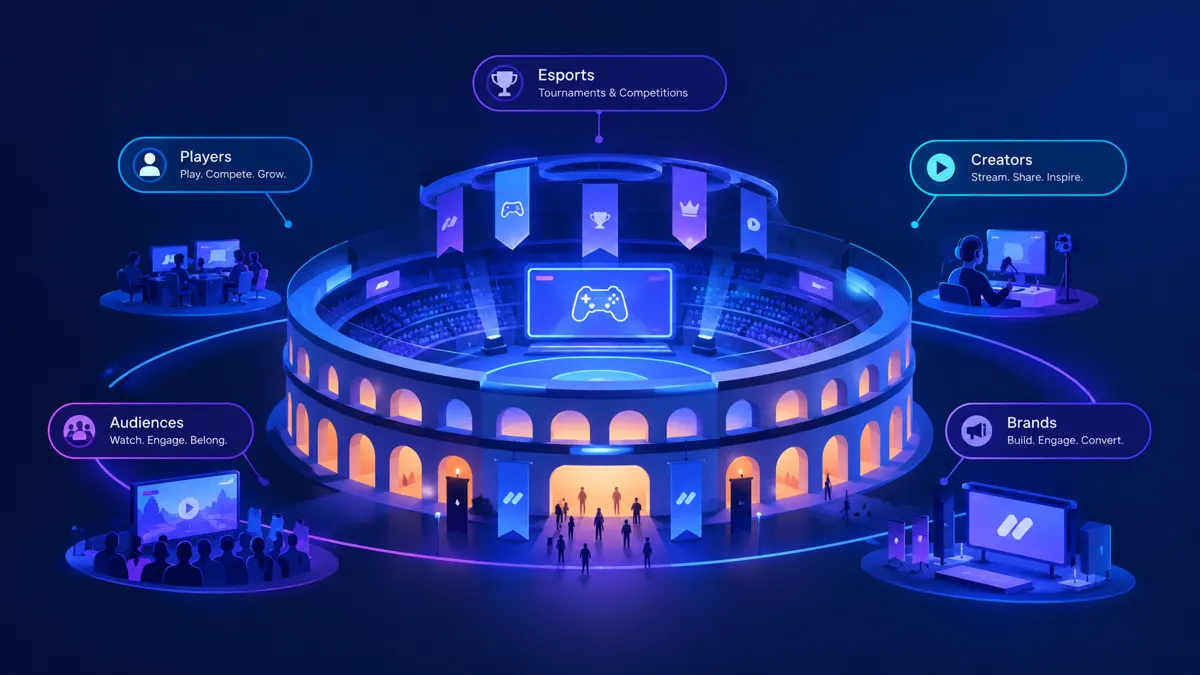
India is the world's second-largest gamer base. Half of India's gaming community is over 30, 44% is female, and 60% lives in Tier 2 and Tier 3 cities. Module 2 replaces the "teenage boy in a dark room" stereotype with the real audience, and maps the four players in the ecosystem: publishers, creators, platforms and brands. The takeaway: you don't have to play games to enjoy them, and you don't have to understand them to market in them.
Module 3: The Psychology of Live
Why do millions choose to spend hours watching someone else play? Module 3 explains the three forces that make live different from recorded video: scarcity (this moment won't happen again), authenticity (you can't fake live) and parasocial connection (viewers don't watch a creator, they visit a friend). It shows why live is not another media format but a social experience.
Live is not another media format. It is a social experience.
Module 4: Building Brands Through Livestream
Showing your brand in a stream isn't the hard part. Showing up in a way people don't skip is. Module 4 compares the three routes into a stream on brand affinity, conversion potential, budget and time to ROI, then sets out six principles for showing up well: enter the conversation, choose creators for community, add value, build moments, design for participation and measure attention.
Module 5: Measuring Livestream Marketing
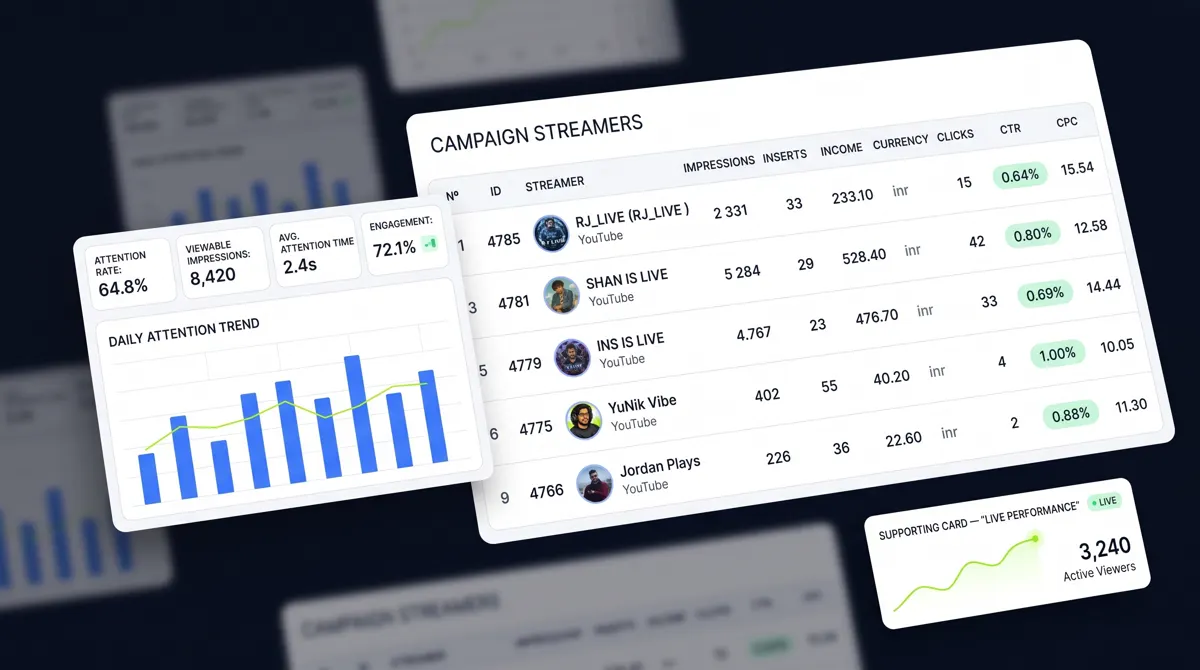
Every marketer asks how many people saw their brand. The better question is how many stayed and engaged. Module 5 explains why reach, impressions, views and CTR measure delivery rather than attention, and introduces the StreamO Live Attention Index: five dimensions (Duration, Density, Participation, Response and Retention) that roll up into one score per campaign.
Module 6: The Future of Livestream Marketing
Module 6 looks ahead through four lenses: content (every niche and language goes live), platforms (YouTube Live leads in India), monetisation (the mega-creator era is giving way to networks, and commerce is becoming the stream) and technology (AI will change what happens during the stream). It ends with three things brands should stop doing now.
Every major marketing shift looked optional until it wasn't.
Who it's for
Brand managers who need to brief a livestream campaign next quarter.
Marketing heads who need a clear story for their CMO and CFO.
Agency planners who need to add live attention to a media plan.